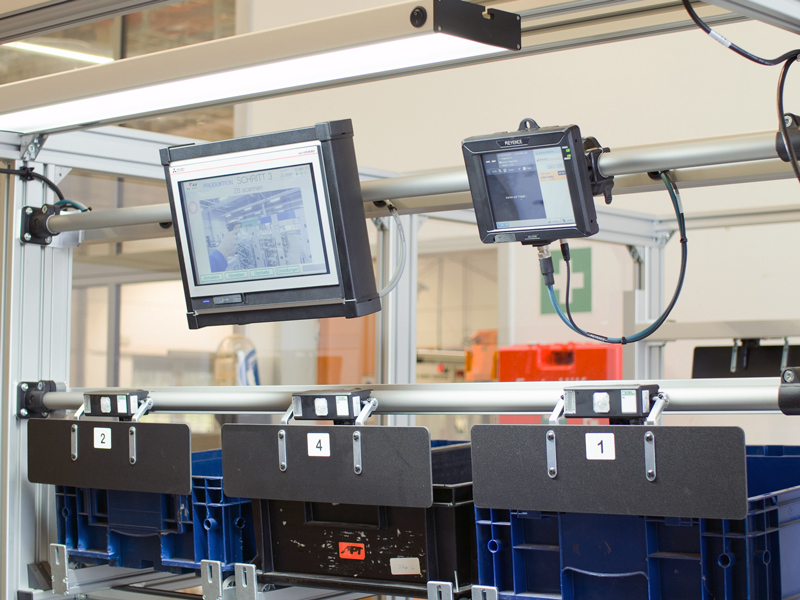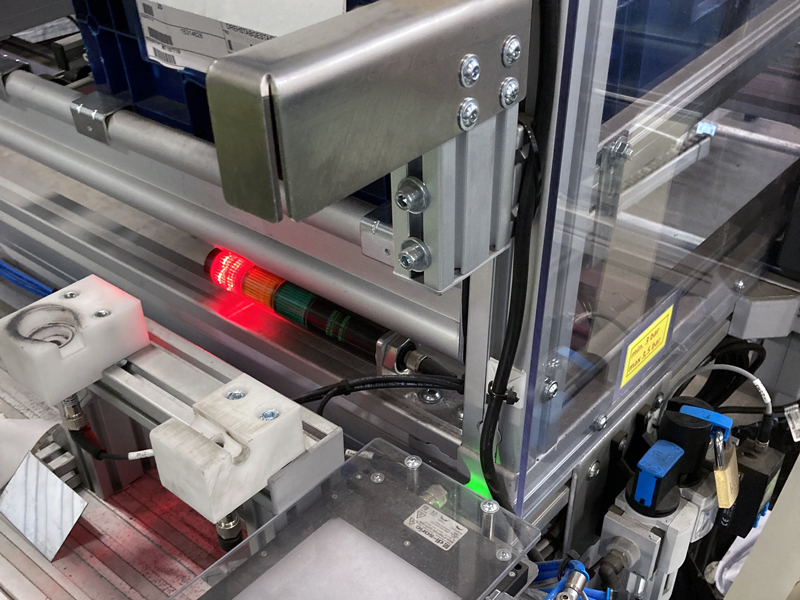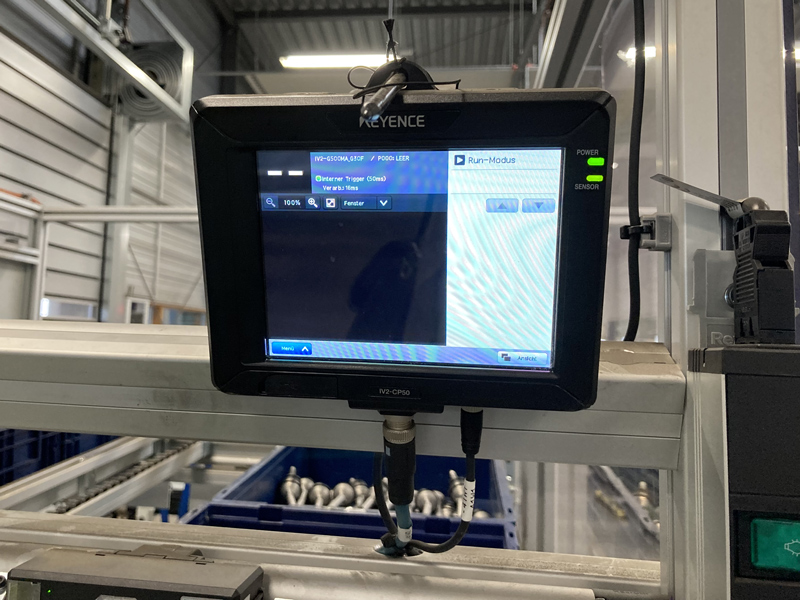


When assembling components at manual workstations, the components provided are picked up by hand. In this process, it is almost inevitable that—for example, due to employee habits—the wrong components will be picked up and installed. As the complexity and variety of the components to be assembled increase, the likelihood of picking up the wrong components rises even further.
With guided manufacturing solutions, errors can be easily avoided
Common sources of error during manual assembly include picking up the wrong components—those that look similar or have similar names—placing components in the wrong order, or simply omitting a component. A quality inspection conducted after production is not sufficient to prevent errors from occurring during assembly. Rectifying these errors is significantly more time-consuming, or, in the worst-case scenario, incorrectly assembled products may be shipped to the customer.
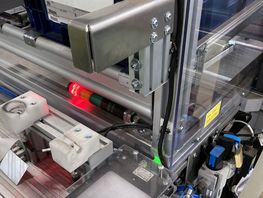
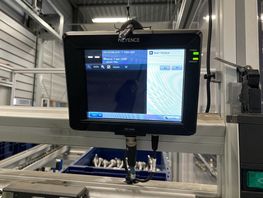
A Poka Yoke assembly station can provide a solution to these problems. The term “Poka Yoke” is a Japanese concept that can generally be translated as “error prevention.” Poka Yoke is a method for preventing errors in production or logistics at the source, before they can even occur and result in unforeseeable costs.
Brochure RK Assembly Workstations Video Poka YokeCognitive assembly assistance systems are characterized by their ability to solve complex tasks based on the specific situation. To this end, sensors provide environmental data relevant to the solution, which is linked to the assistance system’s stored knowledge to assess the current situation and determine the optimal course of action.
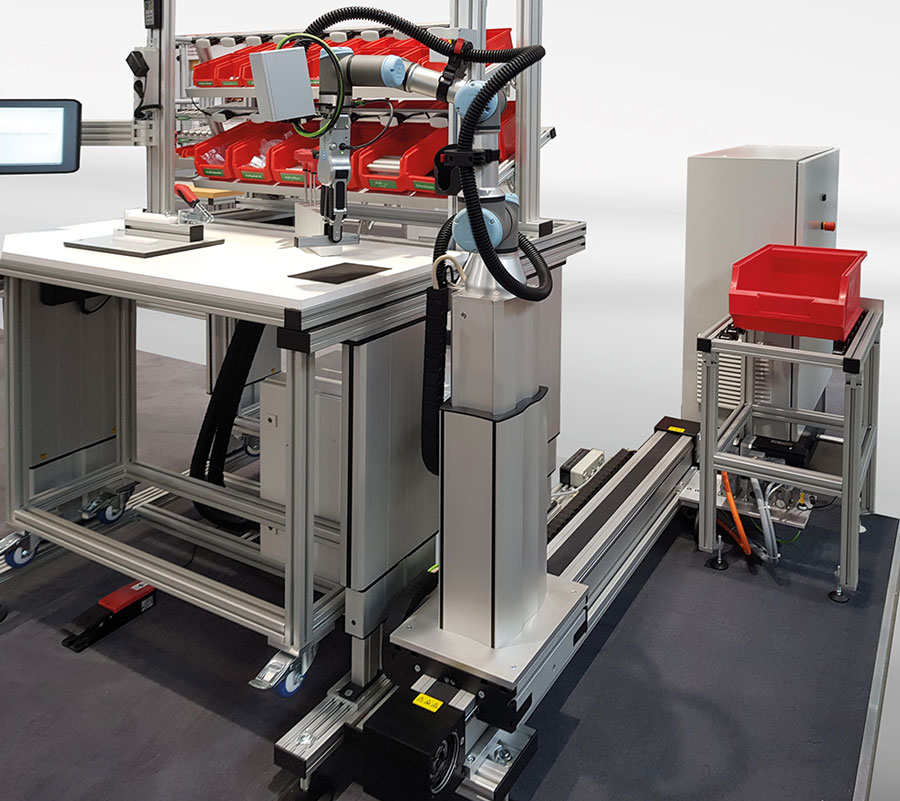
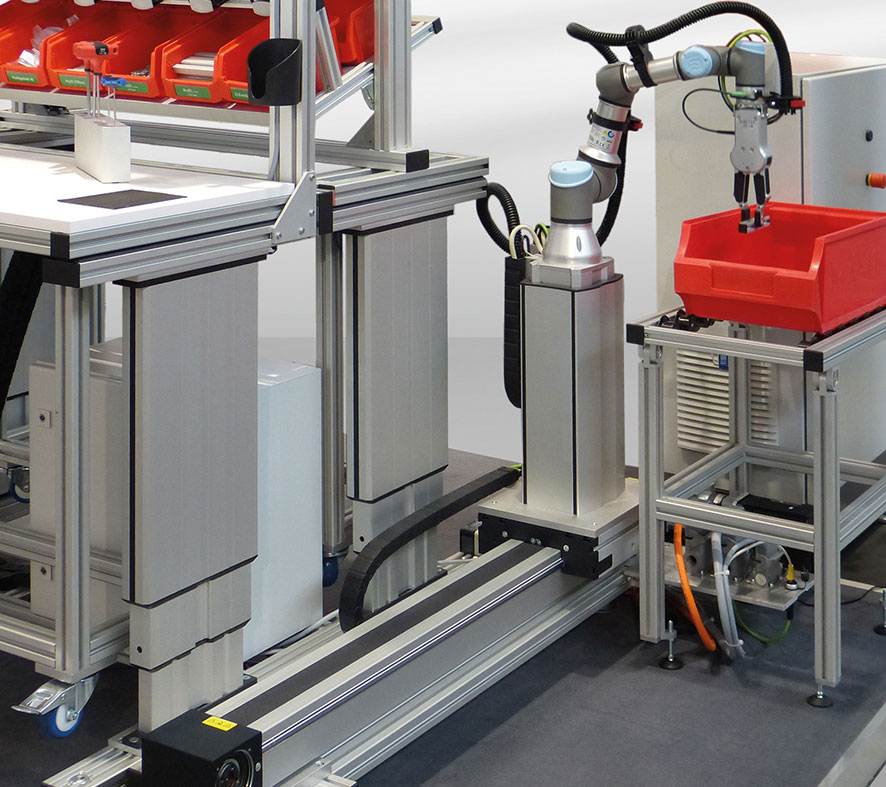
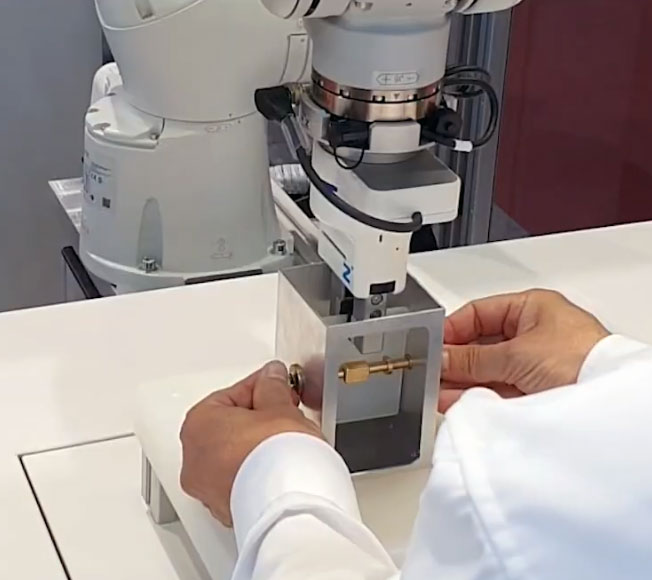
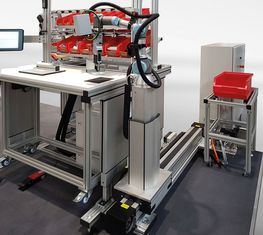
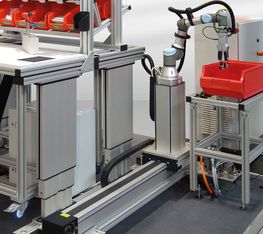
Small collaborative six-axis robots (cobots) are playing an increasingly important role in production and assembly processes. Their range of motion can easily be extended using linear axes, which allow the cobots to be moved horizontally or vertically to their respective workstations. When combined with height-adjustable workstations and pick-to-light systems, they open up entirely new assembly concepts.
Cobots can assist assembly workers in many ways: They lift heavy objects or take on monotonous, physically taxing tasks such as the precise, repetitive feeding of parts. In this way, they reduce the worker’s workload and help protect their health. Collaborative robots are also well-suited for path-guided tasks that a human cannot perform as precisely, consistently, or quickly and safely as a machine. This includes, for example, tightening particularly delicate screws or making riveted or adhesive joints. Cobots also provide valuable assistance during times of labor shortages.
The demands placed on modern workbenches are diverse, and standard products often fail to meet them satisfactorily. RK Rose+Krieger has therefore redesigned its RK Easywork workbench—which is ideally suited as a base for cobot assembly stations—and equipped it with numerous features that make it an attractive, task-specific solution. It stands out for its excellent ergonomics and high degree of customization. This makes it particularly attractive for small- and medium-volume production runs where the intended use is not permanently fixed. Even after years of use, the robust workbench can be expanded and its functionality modified thanks to the modular system. RK Rose+Krieger, a specialist in LEAN workstations, uses the RK Easywork as the basis for developing such a work environment, which is designed according to specific standards.
Brochure RK Assembly Workstations Assembly workstations with COBOT integrationPlease use the contact details below or the contact form—we will get back to you as soon as possible.